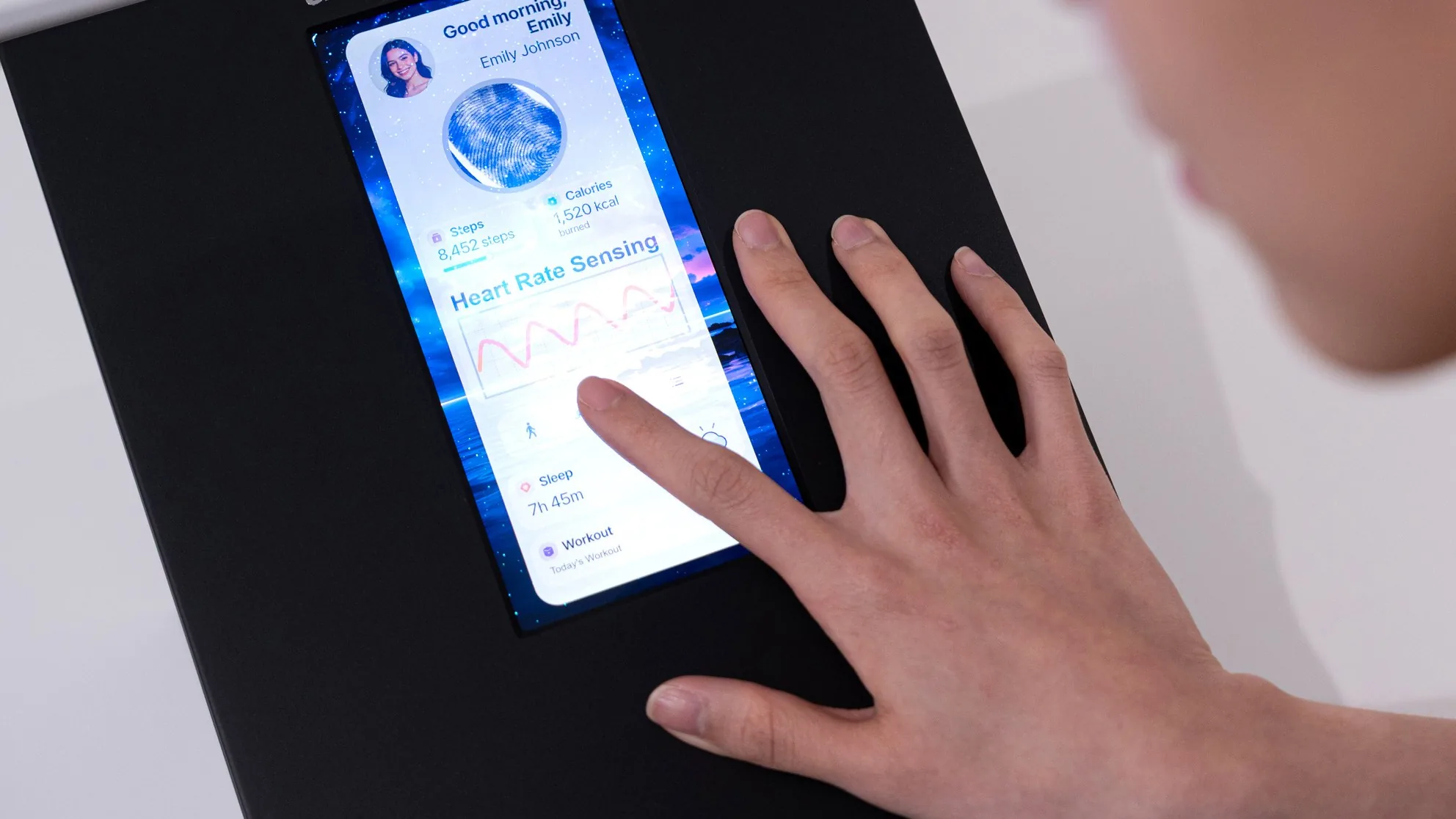
Samsung Display is building a 7-inch-class OLED panel whose red, green and blue pixels are made without a fine metal mask (FMM), The Elec reports, citing unnamed industry sources. The engineering sample uses Samsung Display’s own process, called Micro Patterned OLED (MPO).
Instead of a mask, MPO separates the pixels with microscopic barriers and photolithography. ViP from Visionox, a Chinese OLED maker, and LG Display’s FliPP work the same broad way, but they coat organic material across wide areas of the panel, then etch away the parts they don’t need.
Samsung Display seems to be doing the opposite. It builds the barriers first and puts organic material only where the pixels go, so the organic layers never get etched. It’s also reportedly developing MPO to remove the barriers once they’ve done their job, while ViP and FliPP leave theirs in the finished panel.
Building in that order wastes less material and takes fewer manufacturing steps, and dropping the etch could make panels simpler and cheaper to build. It also makes tighter pixel spacing easier, with less damage to the organic layers as pixels shrink. Industry observers think the differences could keep MPO clear of patents on ViP, FliPP and Applied Materials’ mask-free methods.
A rival’s smartwatch panel is said to be what caused the project to start moving again. MPO had effectively been on hold until early 2026, and Samsung Display expected a Visionox ViP watch panel it got in March to trail masked panels on yield and performance.
Visionox is reportely still struggling with yields, but its panel’s device characteristics were comparable to masked ones, even as a first-generation product. Yields, the same source of the above report says, are what Samsung Display believes it’s good at fixing.
The sample isn’t for any particular customer. Samsung Display is reportedly building it to near-mass-production standards around hypothetical customer requirements, aiming for the end of 2026, with a possible slip into the first quarter of 2027. Could this new tech lead to sharper, cheaper OLED screens? We’ll see in a few years – hopefully.