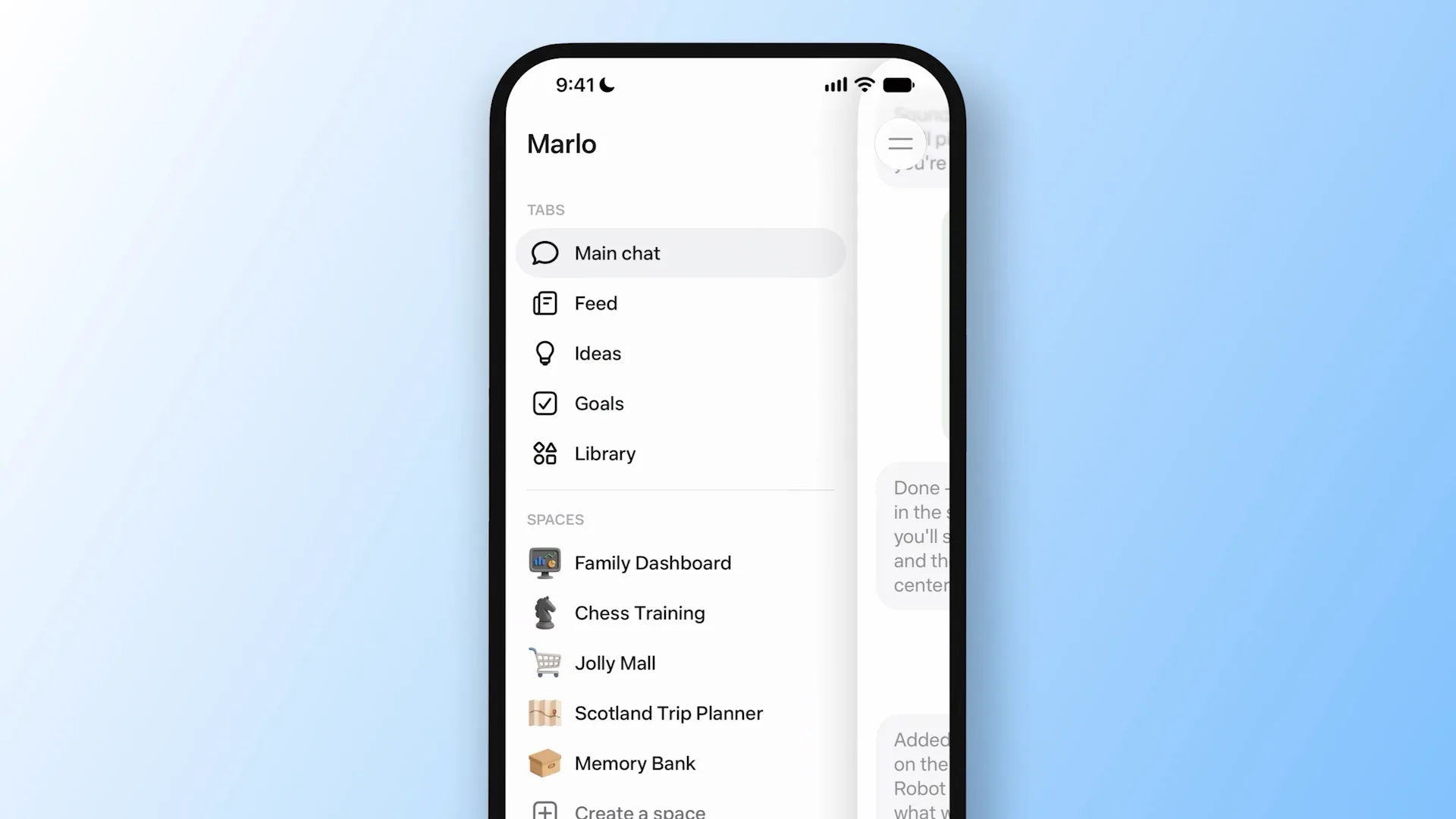
Muse, Meta’s personal AI agent app, can now build you your own mini-apps. Called spaces, they can start from simple descriptions, like “a holiday gift tracker, a daily word game, or a planning board for your next DIY project,” Meta announced. Every space you make becomes part of the app.
That first build is only the starting point. As you use a space, you can keep reshaping it by asking Muse: add what’s missing, try a new look or change how it works.
You also decide where spaces sit. You can add them to the sidebar, move them into the main tabs, hide the ones you don’t need right now or schedule when they appear. Meta’s example is a weekly planner up front during the workweek, swapped for your weekend plans on Saturday.
Spaces connect to the apps you use and keep themselves up to date in the background, so new concert dates, price changes or savings progress show up without you asking. You can check things off, add notes and make edits inside a space, and it’s all there when you come back.
Meta’s first example leans on Meta’s own apps, though. It’s a shopping hub that brings gift ideas, wishlists from your Instagram saves, and your Marketplace listings and buyer messages into one view. Others include a school dashboard that finds your kids’ events in school emails and adds them to your calendar, and an order tracker for a small business.
You can build spaces now everywhere Muse is available. Meta says it’s exploring ways to share spaces with other people, and it’s also rolling out specialized versions of its models to Muse, trained with what it learned from Muse Wonder, its models for agents.
The take
We think this turns Muse from a chat window into a home screen you design yourself. And when Meta’s first example pulls in Instagram saves and Marketplace messages, that home screen starts with Meta’s own apps.