Apple is reportedly weighing the cheaper of two distinctive ways to make faster transistors for future Mac OLED screens. For the high-mobility oxide (HMO) layers it’s developing for next-generation OLED panels, Apple is said to be considering “sputtering” as its preferred method, ahead of the more precise atomic layer deposition (ALD), The Elec reports.
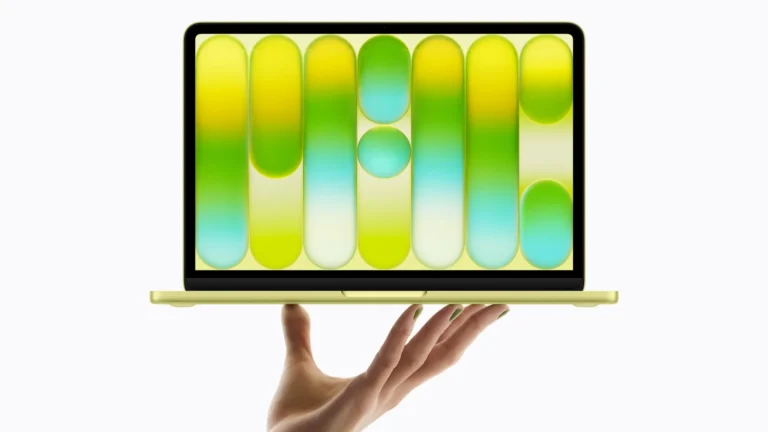
HMO is in the running for future high-resolution OLED screens in MacBooks and iMacs. The Mac already has OLED, in the touchscreen MacBook Pro Apple announced on October 28th, which uses a tandem OLED panel.
The goal is to lift the electron mobility of the panel’s transistors from about 10 cm²/V·s in today’s oxide designs to between 30 and 50. With more mobility, the transistors can supply more current to each pixel, which suits higher resolutions and refresh rates.
The panels could get simpler to build, too. Premium OLEDs today mix silicon and oxide semiconductors, and if HMO performs well enough, some of the silicon steps could switch to oxide, cutting production costs.
ALD is the precise option. It builds the film one atomic layer at a time for tight control over thickness and makeup, but its equipment and materials are expensive, and that’s reportedly why Apple is looking at sputtering. Sputtering can run on equipment already in OLED factories, though its materials and film structure still need work to deliver both high mobility and reliability.
Korean panel makers Samsung Display and LG Display are developing both methods. Apple reportedly evaluated HMO at its own research facility in Taiwan, then asked Samsung Display to check whether it works in eighth-generation large-area manufacturing. Samsung Display is still working out whether it can hit Apple’s mobility and reliability targets at that scale.
LG Display is developing a sputtering version on its sixth-generation line for small and medium OLEDs. Last year, it showed an OLED prototype with ALD-made oxide transistors at about 40 cm²/V·s, but it’s reportedly leaning toward its existing sputtering equipment, wary of the burden of extra capital spending.
The final process isn’t settled yet. Whichever method wins has to keep that mobility in the finished panel, since heat, light and the many manufacturing steps can shift it, and both panel makers are testing each method’s performance and stability.