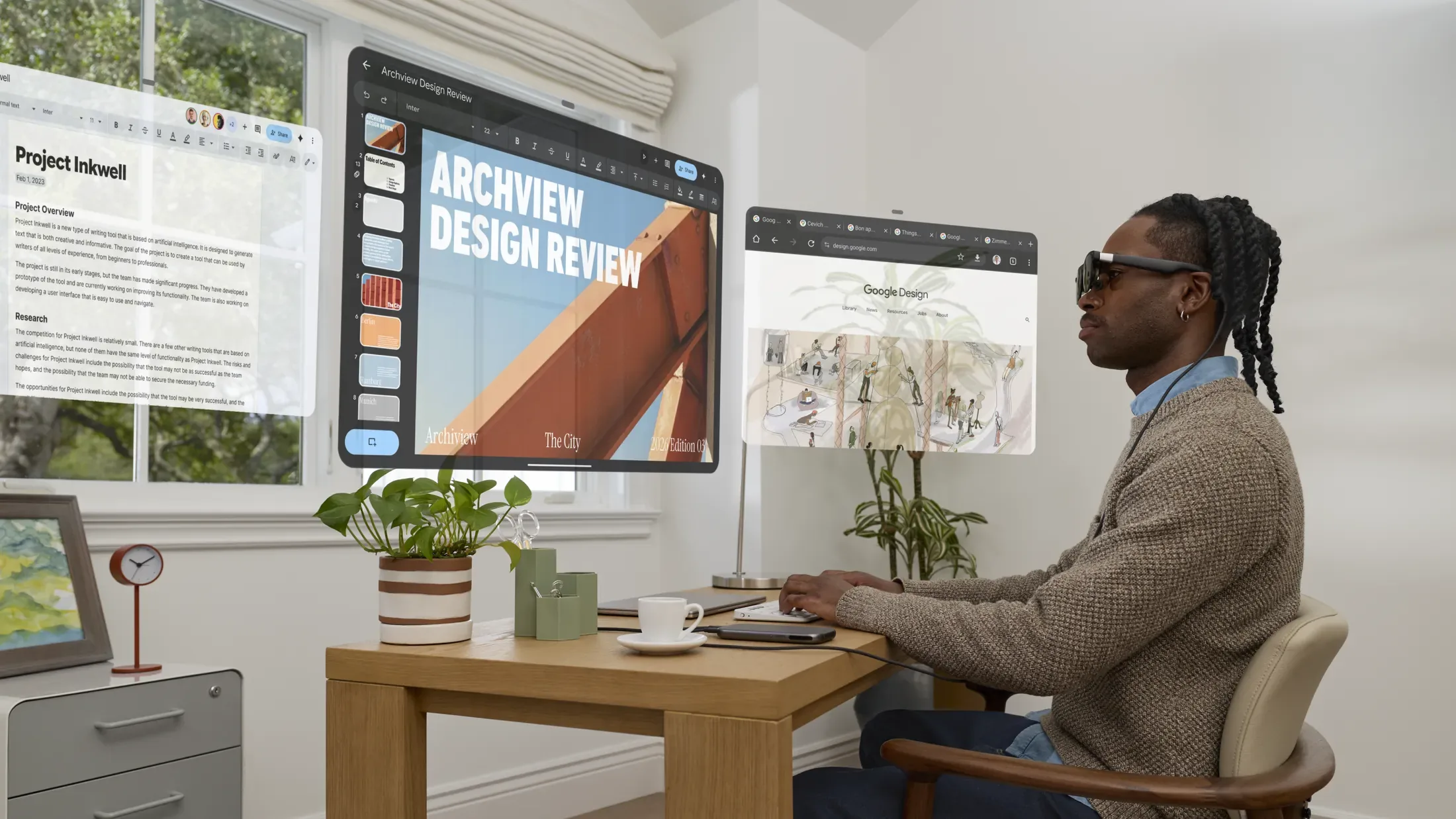
XREAL Aura runs Google’s Android XR on see-through glasses, with the computer in a puck at the end of a cable. XREAL announced it as the first wired XR glasses powered by Android XR, built with Google and Qualcomm and launched on stage at Google’s Android Developer Summit.
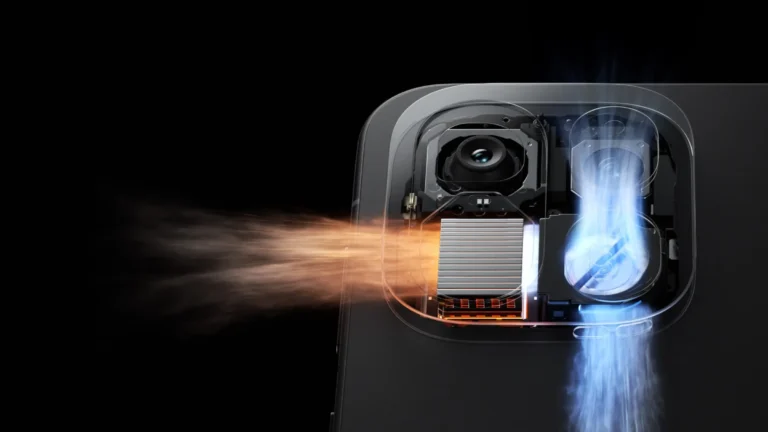
The puck does the heavy lifting. It holds the battery, a fan and Qualcomm’s new Snapdragon Reality Elite chip, which runs Android XR, and it doubles as a trackpad. That keeps the glasses to 95 grams, at the cost of a cable.
The frame still has a chip of its own. XREAL’s X1S tracks the glasses’ position with 3 milliseconds of lag, by XREAL’s count, so windows stay pinned in place as you turn your head.
You look through the lenses, not at a camera feed. Sony Micro-OLED panels put 1920 x 1200 pixels in front of each eye at up to 120Hz, across a 70-degree field of view. The lenses also dim in five steps, for when you’d rather have a private theater than the room.
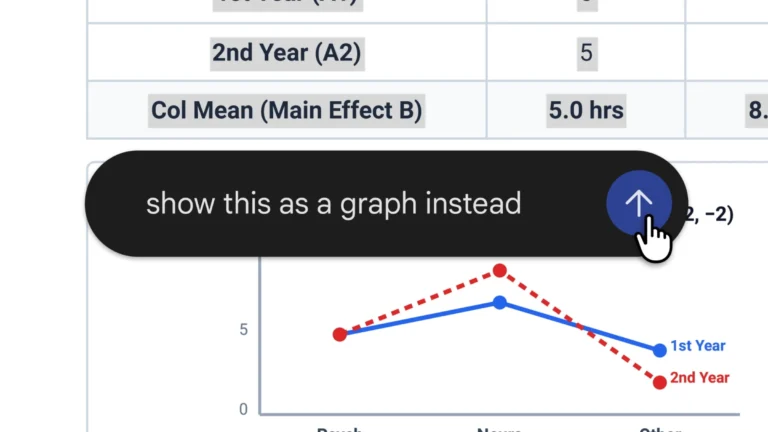
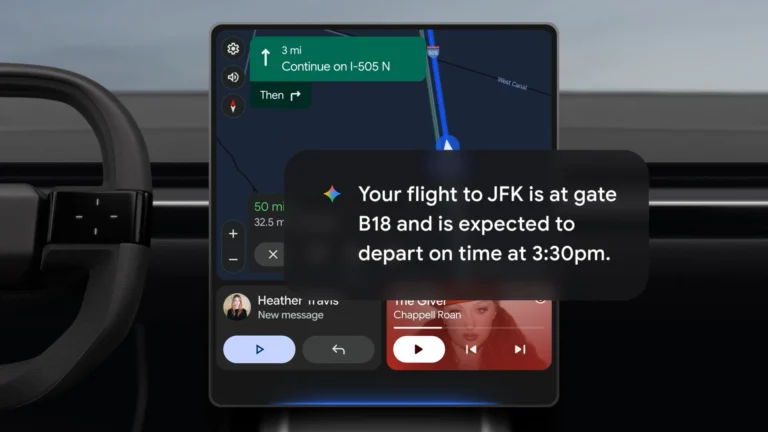
Gemini sees what’s in the room and on your screens, and it can now highlight what to focus on when you share your view, Google says. Ask, and it will tidy up your windows, too.
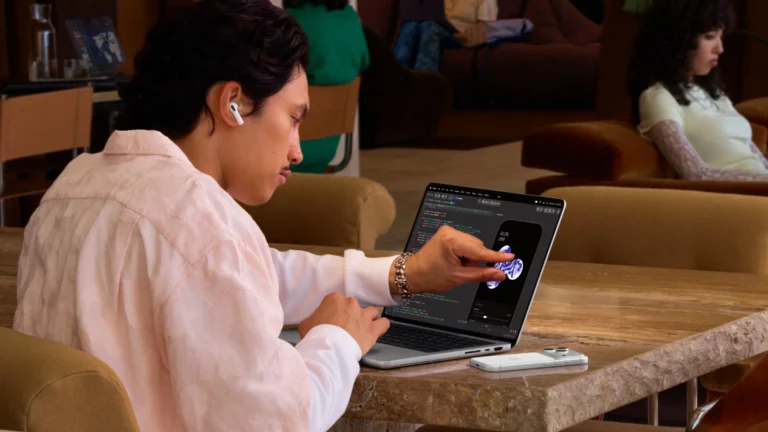
Plug a laptop or a compatible handheld into the puck over USB-C, and Wired Mirroring turns its screen into a window you can resize and place anywhere. It sits beside millions of Google Play apps and more than 150 made for XR, including an NBA app that shows up to three games at once with League Pass.
XREAL Aura key specs
- Display: Sony Micro-OLED, 1920 x 1200 per eye, up to 120Hz, up to 1,050 nits; optical see-through X Prism optics with a 70-degree field of view (32 pixels per degree); five-level electrochromic dimming
- Processor: Snapdragon Reality Elite in the puck (48 TOPS for AI); XREAL X1S coprocessor in the glasses
- Memory and storage: 12GB RAM with 256GB, or 16GB RAM with 512GB (UFS 4.0)
- Sensors: two world-facing tracking cameras, an RGB camera with a privacy LED, four microphones; six-degrees-of-freedom and hand tracking
- Audio: open-ear spatial speakers, tuned by Bose
- Battery and charging: 4,455mAh (34.84Wh) in the puck; USB-C charging up to 57W (PD 3.0 with PPS, QC 3.0)
- Connectivity: Wi-Fi 6/6E, Bluetooth 5.3, GPS; two USB-C ports on the puck (one for the glasses, one for charging and DisplayPort video in)
- Software: Android XR with Gemini and Google Play
- Size and weight: glasses 95g, puck 265g; M (60–66mm) and L (66–72mm) fits for the distance between your eyes
- Other: puck trackpad and fingerprint button; active fan cooling in the puck; prescription lenses available
The 12GB RAM, 256GB model costs $1,099 (about Php 70,300) and the 16GB RAM, 512GB model $1,299 (about Php 83,100) through December, then $1,279 (about Php 81,900) and $1,499 (about Php 95,900). Orders are open in the US, Canada and South Korea, and Google says Japan follows on November 2nd, though XREAL’s release lists Japan as open already. Shipping starts in mid-November. Just mind the cable when you stand up.